Intro
Mahadevi/Mahamaya/Mulaprakriti/Adi Parashakti is the supreme goddess in Hinduism.Mahadevi is known by many names in Hindu texts. These include - Mulaprakrti ('she who is primordial matter') - Mahamaya ('she who is beyond maya') - Adi Parashakti - As Tripura Sundari, she is the complete supreme form. According to the goddess-centric sect Shaktism, all Hindu gods and goddesses are manifestations of this great goddess.
Considered the ultimate reality or Para Brahman.
In Shakta texts, Mahadevi is mentioned as Mulaprakriti (Primordial Goddess), having five primary forms—Parvati, Lakshmi, Sarasvati, Gayatri and Radha, collectively known as Panchaprakriti. Besides these, the goddesses Tripura Sundari and Durga are also identified with Mahadevi.
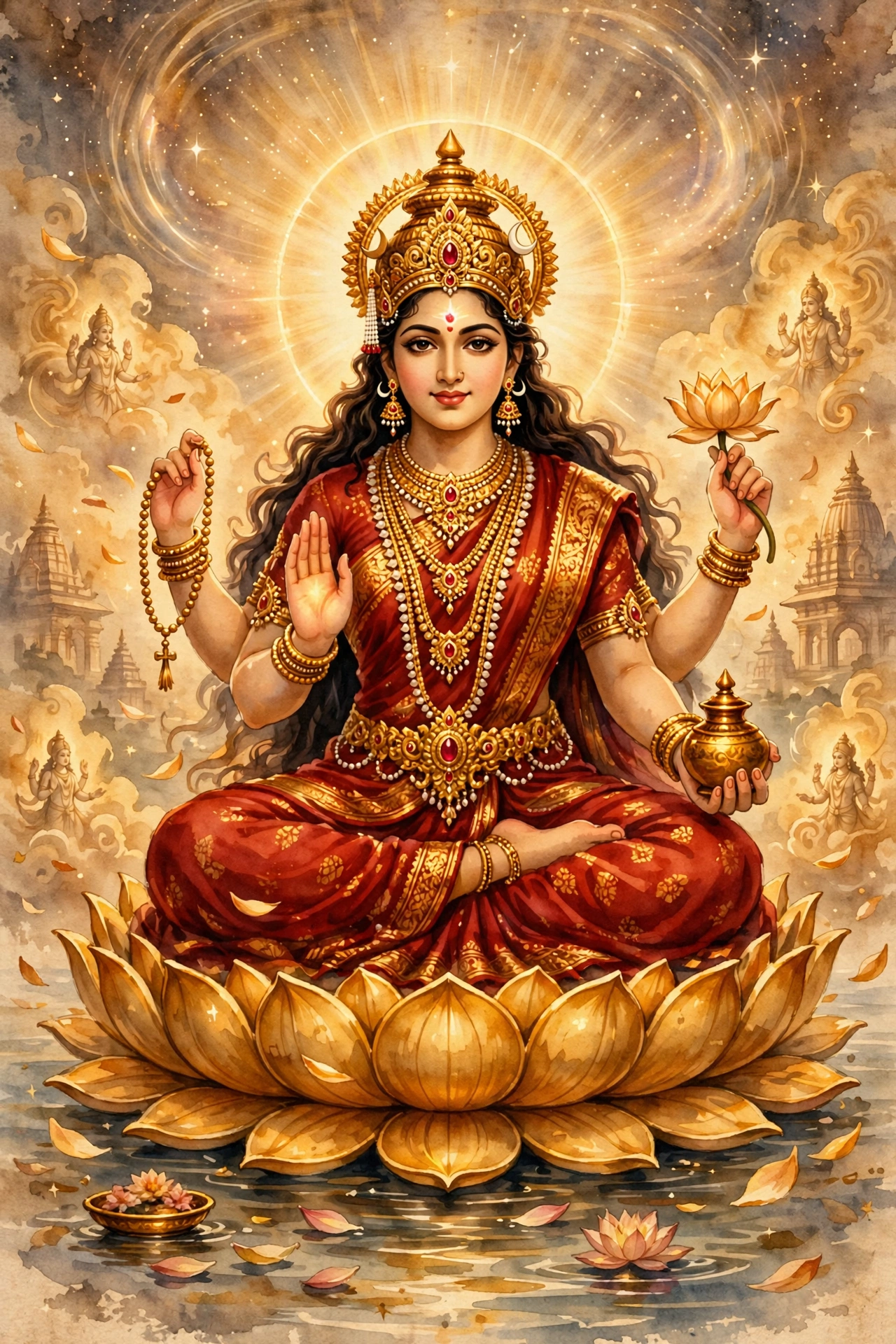
In Shaktism, where Mahadevi / Adi Parashakti / Mahamaya is Para Brahman — the ultimate, formless supreme reality — the Mahavidyas are her 10 most important manifestations as knowledge, power, and reality itself. The Mahavidya (lit. Great Wisdoms) are a group of ten Hindu Tantric goddesses.
They are usually named in the following sequence: Kali, Tara, Tripura Sundari, Bhuvaneshvari, Bhairavi, Chhinnamasta, Dhumavati, Bagalamukhi, Matangi and Kamalatmika. The Origin Story most Puranas give: Sati, the first wife of Shiva and an avatar of Adi Parashakti, is insulted by her father Daksha. When Shiva tries to stop her from going to Daksha's yagna, she reveals her supreme form — and to show she is everywhere and inescapable, she surrounds Shiva with 10 terrifying and beautiful forms in the 10 directions. Those 10 are the Mahavidyas. Shiva then understands she is not just his wife, she is Mahadevi, the supreme reality. How they relate to her — 3 levels: 1. As Her Powers: Each Mahavidya is one of Mahamaya's cosmic functions. She veils reality (Mahamaya) and also reveals it (Mahavidya = Great Knowledge). 2. As Her Personalities: Shakta texts say Adi Parashakti deliberately takes these 10 forms to teach that she contains all opposites — she is both beautiful and terrible, mother and destroyer, auspicious and inauspicious. 3. As Her Path: For a Shakta practitioner, worshipping the Mahavidyas is worshipping Mahadevi to attain specific wisdom. You don't need to go beyond them to reach her — they are her. The 10, and what aspect of Mahadevi they show: 1. Kali — Time, death, and liberation. The most famous. Black, fierce, standing on Shiva. She is Mahadevi as the power that destroys ego and time itself. 2. Tara — The Guide across the ocean of existence. The star, the saviour. She is Mahadevi as protective, compassionate knowledge. Similar to Buddhist Tara. 3. Tripura Sundari / Shodashi — The 16-year-old supreme beauty, ruler of the three worlds. She is Mahadevi as pure consciousness, bliss, and ultimate beauty. In Sri Vidya, she IS Lalita, considered the highest form of Adi Parashakti. 4. Bhuvaneshwari — Queen of the universe, whose body is the cosmos. She is Mahadevi as space itself, the one who contains all worlds. 5. Bhairavi — Fierce, fiery, awe-inspiring. She is Mahadevi as Tapas (spiritual heat) and divine wrath that burns away impurities. 6. Chinnamasta — The self-decapitated goddess who feeds her attendants with her own blood. She is Mahadevi as self-sacrifice, the paradox of life feeding on life, and the power of the awakened Kundalini. 7. Dhumavati — The widow, old, smoky, inauspicious. She is Mahadevi as the void, loneliness, disappointment, and the wisdom that comes after everything is lost. She shows Mahadevi exists even in what we call inauspicious. 8. Bagalamukhi — The paralyzer of enemies. Golden, pulls the tongue of a demon. She is Mahadevi as Stambhana — the power to stop, silence, and still all movement and speech. 9. Matangi — The outcaste, polluted goddess, goddess of speech, music, and inner knowledge. Dark emerald. She is Mahadevi as the wisdom that lives outside orthodox rules. 10. Kamala / Kamalatmika — Lotus goddess, very similar to Lakshmi. She is Mahadevi as prosperity, fertility, and pure auspicious grace. So in short: Mahadevi / Adi Parashakti = The Ocean 10 Mahavidyas = 10 major waves — Kali is her power of Time, Sundari is her power of Beauty, Bhuvaneshwari is her power of Space, Chinnamasta is her power of Sacrifice, Dhumavati is her power of Emptiness, etc. In Shakta philosophy, you cannot understand Mahamaya fully by only worshipping the gentle, beautiful forms like Kamala. You must also understand she is Dhumavati and Kali. The Mahavidyas force the devotee to see that the ultimate reality is beyond our concepts of pure / impure, auspicious / inauspicious.
Tripura Sundari, also known as Lalita, Shodashi, Kamakshi, and Rajarajeshvari, is a Hindu goddess revered primarily within the Shaktism tradition and recognized as one of the ten Mahavidyas.[2] She embodies the essence of the supreme goddess Mahadevi. Central to the Shakta texts, she is widely praised in the Lalita Sahasranama and the Saundarya Lahari.[3] In the Lalitopakhyana of the Brahmanda Purana, she is referred to as Adi Parashakti.